
Chimney sweeping and cleaning in Thornton.
A sweep takes the soot coating off the walls of the flue and the smoke shelf, and clears the firebox and any stove pipe. Call, or use the form when it is convenient.
- reviews on Googleas of
Our phone line is staffed Sunday to Saturday, 7 AM until 9 PM, and the form never closes.Taking calls now, until Calls resume . Use the form meanwhile.
- Book onlineAny hour
Photo: Stock pond near Barr Lake (146443605), Louis, CC BY-SA 2.0
Sweeping, one stage at a time.
What leaves the flue, how often it should, and what to settle before the first fire of the season.
What comes out of the flue.
Each fire leaves a thin film on the flue walls. Fresh soot is dry and brushes away. After many slow, cool burns it turns into sticky tar, and finally into a hard, glassy glaze that even a stiff brush barely moves.
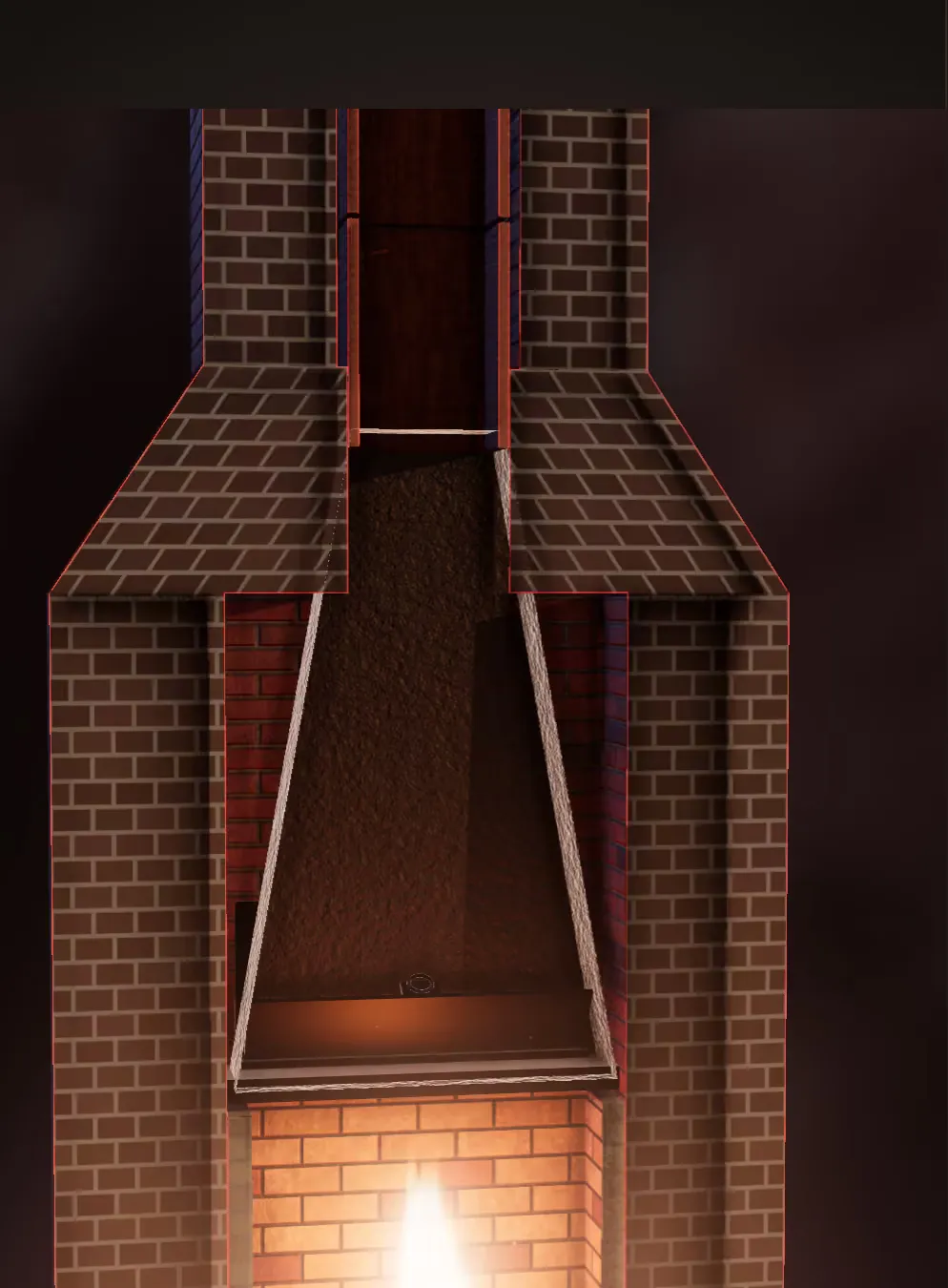
We start at the damper and brush toward the cap, then deal with the smoke shelf, and last the floor of the firebox. Everything loosened is collected and carried off, so nothing stays behind to burn later.
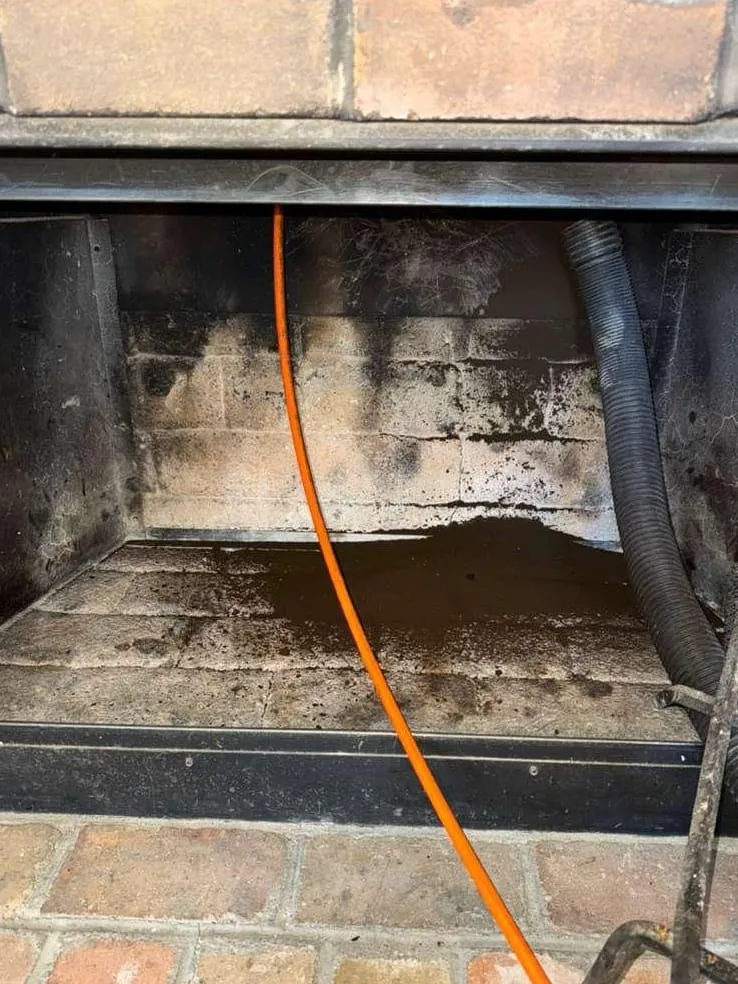
From our Google Business Profile The payoff of a clean flue.
Chimney fires start when creosote that has piled up catches light inside the flue. With the deposit gone, a stray spark has nothing to cling to.
Draft improves too: smoke goes up and out, where a coated flue lets it spill back as soon as the damper opens.
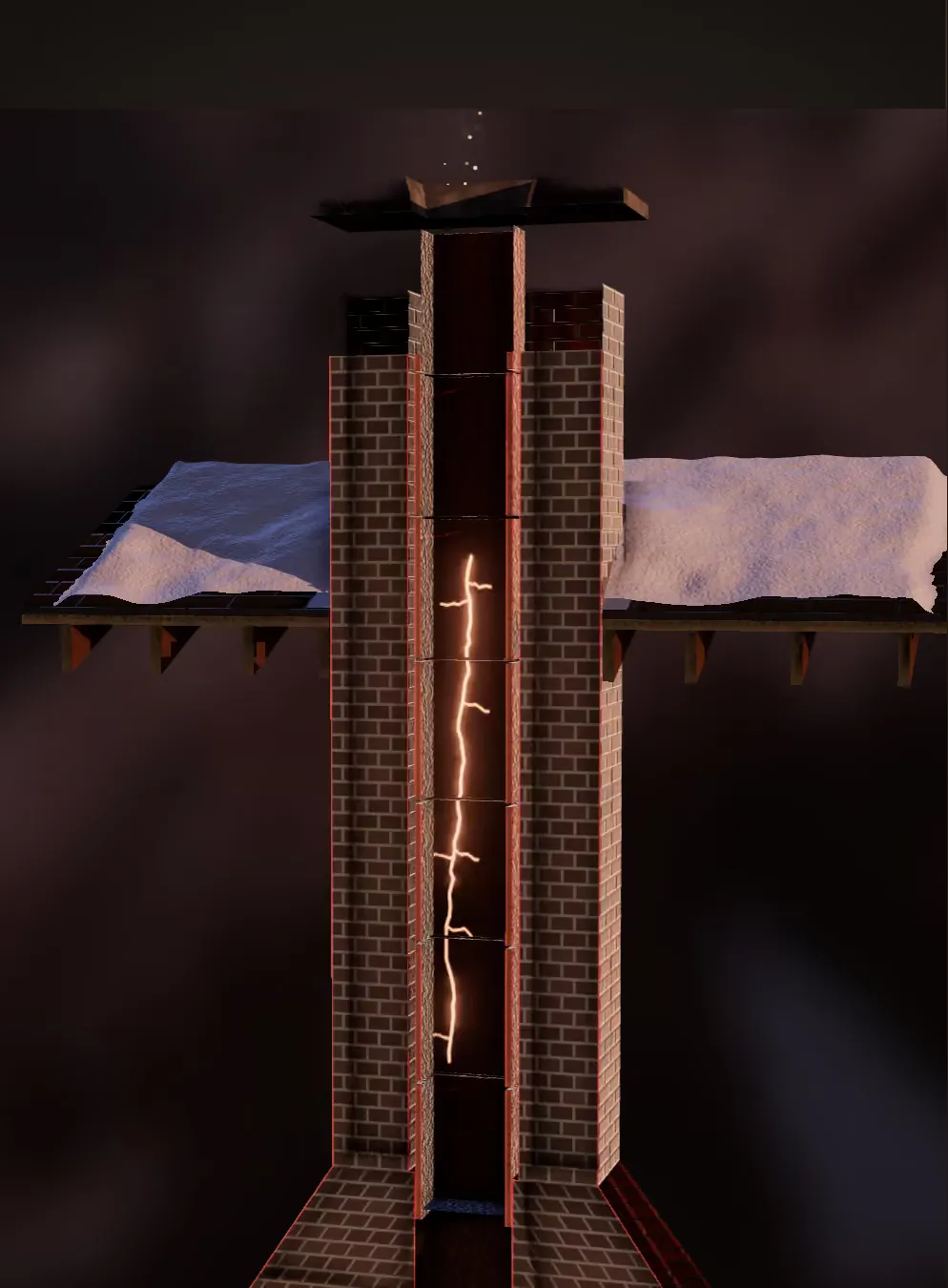
Illustration At the very top.
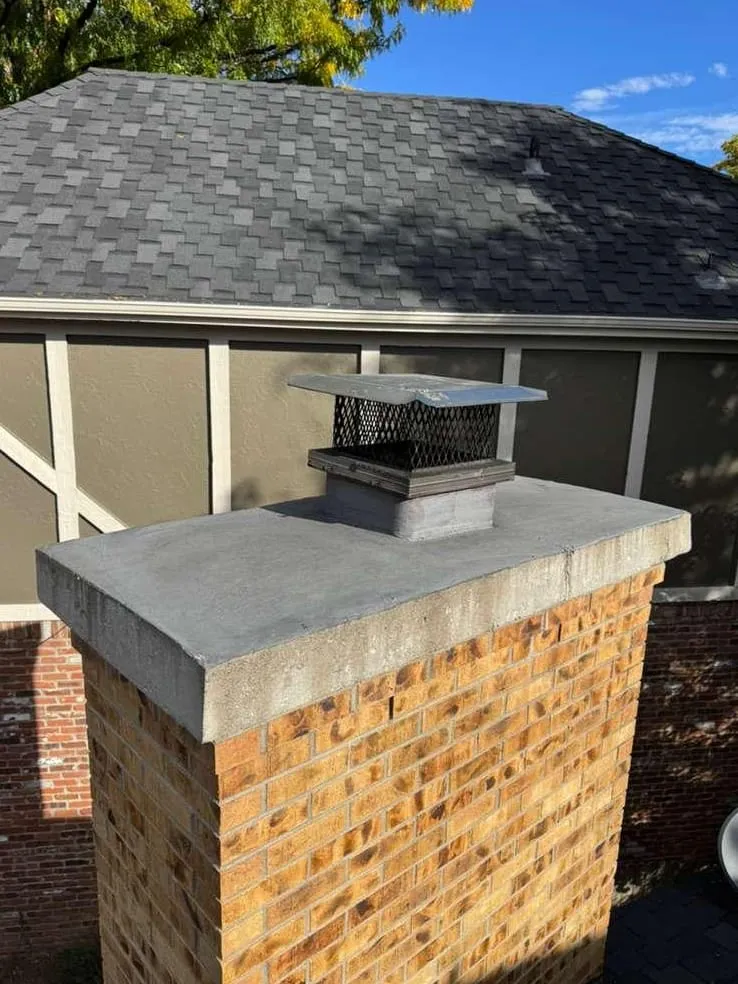
By the time smoke reaches the cap it has cooled, and cool smoke leaves soot behind. Clogged mesh weakens the draft, but that same mesh holds embers in. We clean it each time.
From our Google Business Profile
Questions about sweeping.
Short answers, with a source named where one exists.
When is a sweep due?
Go by how much deposit there is, not by the date. NFPA 211 advises a yearly inspection, which shows the amount and the kind. A shiny or tar-like coating should be dealt with soon.
Sweep, inspection or both?
Sweeping removes deposits. An inspection judges the whole chimney, from top to bottom, at one of three NFPA 211 levels. Because soot can hide damage, one visit often does both.
What does glazed creosote mean?
It is creosote cooked into a hard, glossy, tar-like skin, typical where smoke cools slowly, for example in a stove damped down overnight. A brush hardly shifts it, so finding it means you should book soon.
Does a gas fireplace need sweeping?
Burning gas produces no creosote, but the vent has to stay open. Nests, leaves and flakes from a worn liner can block it, so have the vent checked from time to time.
Why does it smell worse in summer?
Warm, damp air brings out the creosote smell, and a downdraft can carry it indoors. Take the deposit out and the cause is gone.
How do I schedule a sweep?
Call (720) 964-2146 (Sunday to Saturday, 7 AM until 9 PM). The form further down is open at any hour, and a person calls back to fix a day.
Set up your chimney visit.
Use the form to say what looks wrong, or simply phone. A person rings you back to pick a day.
- 1Reach out Call the office, or send a few lines on the form.
- 2A person rings back Someone phones to find a day that suits you.
- 3Cap to firebox The visit works down the chimney in order, the roofline first and the hearth last.
- 4Your call We say what we found, and you decide what comes next.
By form
Any hour, day or night
Photo: Hail Storm Park And Streets I, Eric Johnson, CC BY-SA 3.0
Planning a fire before the first hard freeze, or puzzled by something up on the roof? Ask us.
Our phone line is staffed Sunday to Saturday, 7 AM until 9 PM, and the form never closes.Taking calls now, until Calls resume . Use the form meanwhile.
Book online